As the chemical manufacturing industry faces the dual pressures of sustainability and rising cost competition, it’s clear that next-generation technologies cannot rely on a “green premium” to succeed. While these emerging solutions offer significant benefits including reducing environmental impact, improving safety and fostering market growth, the challenges of implementation and cost must be carefully considered.
Industry leaders need to weigh the upfront investments of time and money against the long-term advantages. For sustainability to be economically viable, solutions must be easy to implement, address both raw material cost and availability and offer process efficiencies.
To advance safety and sustainability in chemical manufacturing, the focus is increasingly shifting to three key areas: continuous flow chemistry, bio-based manufacturing, and repurposing existing infrastructure with slot-in technologies.
Understanding Continuous Flow
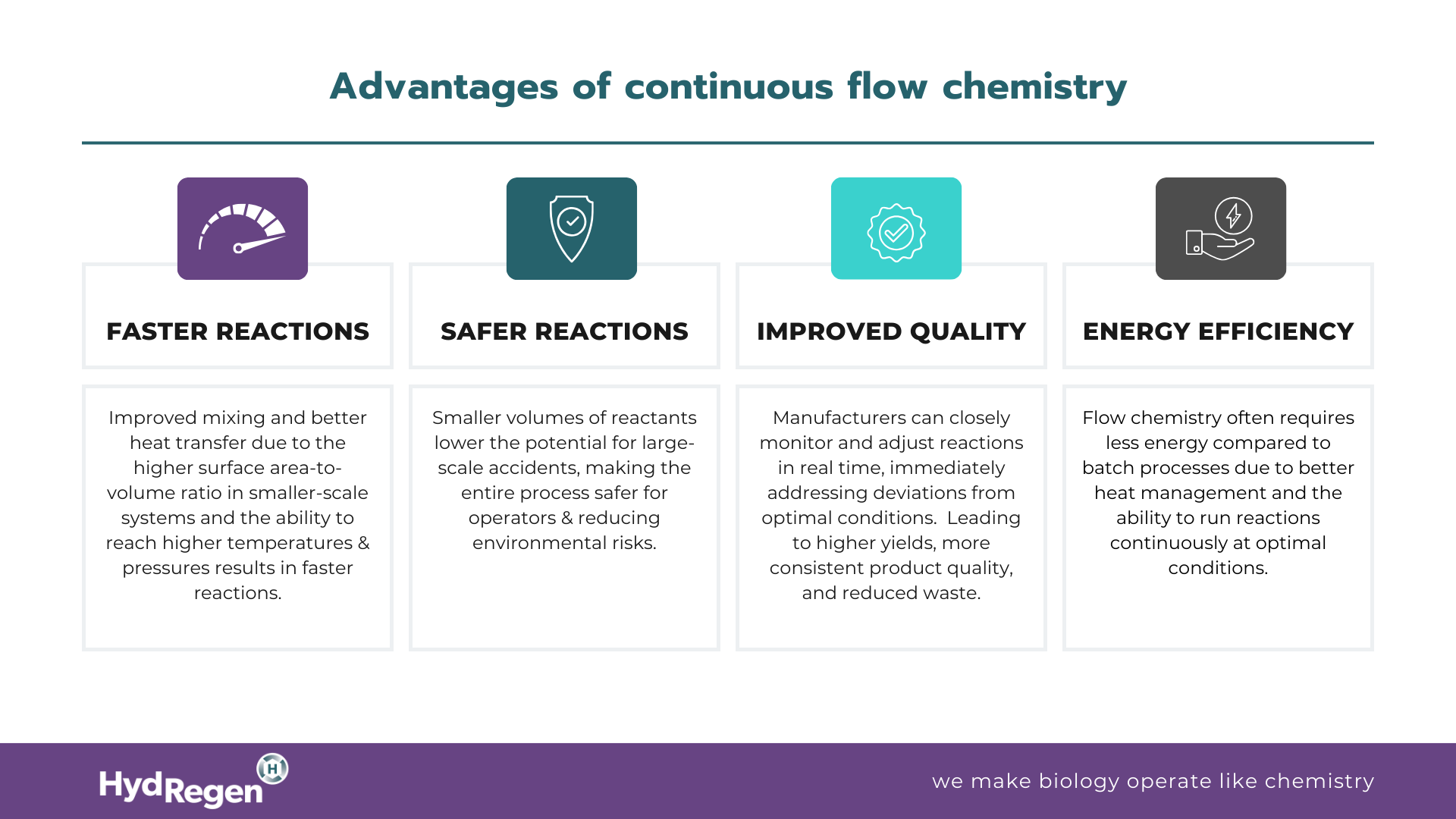
Continuous flow chemistry can significantly improve safety, efficiency, and sustainability. Unlike traditional batch processing, where reactions occur in large volumes over extended periods, continuous flow uses smaller, controlled volumes of reactants, which dramatically reduces the risk of large-scale hazardous reactions. Ensuring a safer operational environment, with reduced risks of explosion or toxic release.
HydRegen: slot-in biocatalytic hydrogenation We are working with AM Technology to delivering the benefits of bio-based chemical manufacturing in their scalable continuous reactors. “We are delighted to have an ACR in our own labs to fast track this collaboration” - Holly Reeve, CEO, HydRegen
Key Benefits:
- Improved Safety : Smaller volumes of reactants lower the potential for large-scale accidents, making the entire process safer for operators and reducing environmental risks.
- Enhanced Control : Continuous flow systems allow for precise control over reaction parameters such as temperature, pressure, and flow rate. This precision leads to more predictable outcomes and higher-quality products.
- Better Yields and Real-Time Monitoring : With continuous flow, manufacturers can closely monitor and adjust reactions in real time, immediately addressing deviations from optimal conditions. This leads to higher yields, more consistent product quality, and reduced waste.
- Energy Efficiency : Flow chemistry often requires less energy compared to batch processes due to better heat management and the ability to run reactions continuously at optimal conditions.
Continuous flow chemistry also aligns with green chemistry principles , reducing resource consumption and waste, making it an attractive choice for manufacturers aiming to improve sustainability.
Bio-based Manufacturing
Bio-based manufacturing is rapidly gaining momentum by leveraging environmentally friendly and renewable resources like plants, algae, and waste materials to produce chemicals, fuels, and plastics. This shift is driven not only by regulatory pressures but also by growing consumer demand for sustainable, eco-friendly products.
- Renewable and Sustainable : Bio-based chemicals, derived from renewable feedstocks like biomass, reduce reliance on fossil fuels. Examples include biofuels, biodegradable plastics, and renewable solvents.
- Mitigation of Toxicity : Many traditional chemical processes involve toxic reagents and by-products, such as heavy metals or hazardous solvents. In contrast, bio-based methods often use non-toxic, safer inputs, resulting in less hazardous waste and improved workplace safety.
- Energy Efficiency : Bioprocesses can be less energy-intensive than traditional methods, especially when engineered enzymes or microorganisms are used to catalyse reactions at lower temperatures and pressures.
- Reshoring and Supply Chain Security : The ability to produce bio-based chemicals domestically can reduce reliance on volatile global supply chains and reduce the carbon footprint associated with long-distance transportation.
However, the transition to bio-based manufacturing isn't without challenges. Significant capital investment is often needed to upgrade existing infrastructure to handle bio-based processes. The research and development (R&D) required to optimise these processes can be time-consuming and expensive, delaying returns on investment.
What is exciting however is that some bio-based processes can be integrated into existing chemical production facilities with relatively minor modifications. This ‘slot-in’ technology reduces the capital required for a full infrastructure overhaul, making it more feasible for companies to transition toward more sustainable production methods.
Repurposing Existing Infrastructure with Slot-In Technologies
Slot-in technologies represent a practical and cost-effective approach to modernising chemical manufacturing without requiring a complete overhaul of existing infrastructure. These innovations are designed to "slot into" current systems, enhancing sustainability, efficiency, and profitability with minimal disruption.
Advantages of Slot-In Technologies:
- Seamless Integration : Slot-in technologies are developed to work alongside current production systems, allowing chemical manufacturers to upgrade processes without needing to replace expensive equipment. Minimising downtime and continuity in production.
- Incremental Performance Enhancements: Rather than making radical changes, these technologies deliver steady, measurable improvements. For example, companies can achieve better energy efficiency, improved yields, and reduced emissions, all while keeping core processes intact. This approach allows for continuous improvement without the need for disruptive large-scale projects.
- Cost Efficiency : Since slot-in technologies require minimal changes to existing infrastructure, the capital expenditure (Capex) is relatively low compared to other sustainability initiatives. The shorter payback period and quick returns make this a financially attractive option for companies operating under budget constraints.
- Flexibility Across Feedstocks and Products : These technologies offer versatility, allowing manufacturers to explore alternative, sustainable raw materials or adapt to new market demands without significant reconfiguration. This flexibility reduces the risk associated with adopting new processes and materials, making it easier to respond to changing market or regulatory conditions.
- Sustainability Gains : Slot-in technologies also enable manufacturers to improve energy efficiency and waste reduction by optimising processes already in place. For example, heat recovery systems can be installed to capture and reuse waste heat from reactions, reducing energy consumption. Similarly, process intensification techniques can increase the efficiency of chemical reactions, leading to higher yields with less resource input.
To summarise
Transformation doesn't need to come with a "green premium”. With strategic investments in advanced technologies that optimise existing infrastructure, the chemical industry can achieve significant progress in sustainability while staying economically viable. The key is choosing technologies that deliver both immediate gains and long-term value.
Continuous flow chemistry, bio-based manufacturing, and slot-in technologies provide practical solutions for this shift. By adopting these innovations, manufacturers can boost safety, cut environmental impact, and stay competitive in an eco-conscious market .
Source: https://hydregenoxford.com/news/shaping-the-future-of-chemicals-next-gen-technologies-for-sustainable-manufacturing